
Prelature of Cyprus Կիպրոսի Թեմ | |
|---|---|
 Armenian Prelature of Cyprus emblem | |
| Location | |
| Country | Cyprus |
| Statistics | |
Population
|
|
| Information | |
| Denomination | Armenian Apostolic Church |
| Rite | Armenian Rite |
| Established | 973 |
| Cathedral | Holy Mother of God Cathedral, Nicosia |
| Current leadership | |
| Patriarch | Aram I |
| Catholicosal Vicar | Archbishop Gomidas Ohanian |
Armenian Prelature of Cyprus (Armenian: Առաջնորդարան Հայոց Կիպրոսի) is one of the oldest dioceses of the Armenian Apostolic Church outside historic Armenian territories, and the oldest one under the jurisdiction of the Catholicosate of the Great House of Cilicia. It was established in 973 AD and currently has around 4,000 followers, comprising around 95% of the Armenians in Cyprus.
The seat of the prelature is the Holy Mother of God Cathedral in Nicosia. The prelature building is situated next to the cathedral, on 47 Armenia street, Strovolos, Nicosia.[1] Archbishop Gomidas Ohanian is currently the catholicosal vicar, appointed on 19 July 2024.[2] Archbishop Gomidas arrived in Cyprus on 1 August 2024.
History
[edit] The building of the Armenian Prelature of Cyprus in Strovolos, Nicosia
The Armenian Prelature of Cyprus was established in 973 by Catholicos Khatchig I. In the years that followed, some of its Prelates participated in important church synods, such as Tateos (who participated in the Council of Hromkla in 1179), Nigoghaos (who participated in the Synod of Sis in 1307) and Krikor (who participated in a conference of Greek Orthodox Bishops in Cyprus in 1340). The antiquity of the Armenian Church in Cyprus was confirmed by a bull of Pope Leo X, which was issued in 1519 after multiple discords, according to which the Armenian Prelate would be senior to and take precedence over the Maronite, Jacobite and Coptic prelates.[3][4][5]
Historically, the prelature has been under the jurisdiction of the Catholicosate of the Great House of Cilicia, while today it is the oldest theme that falls under its jurisdiction. During the Ottoman era and early British era, for various reasons, it was at times under the Armenian Patriarchate of Jerusalem (1775–1799, 1812–1837, 1848–1861, 1865–1877, 1888–1897 and 1898–1908), the Armenian Patriarchate of Constantinople (1759–1775, 1799–1812, 1861–1864, 1877–1888, 1897–1898 and 1908–1921), and the Catholicosate of Etchmiadzin (1864–1865).[6] Cyprus was the place of refuge for two exiled Armenian Patriarchs of Constantinople, Archbishop Tavit Areveltsi (1644–1648) and Senior Archimandrite Krikor Basmadjian (1773–1775).
 Archbishop Gomidas officiating in the old Virgin Mary cathedral, occupied Nicosia (2024)
For centuries, the prelature building was located within the Armenian compound in Victoria street in walled Nicosia; when that area was taken over by Turkish-Cypriot extremists in 1963–1964, the prelature was temporarily housed in Aram Ouzounian street (1964–1969) and, later on, in Kyriakos Matsis street in Ayios Dhometios (1969–1983).
Current situation
[edit]The current catholicosal vicar is, as of 19 July 2024, Archbishop Gomidas Ohanian who arrived in Cyprus on 1 August 2024. The parish priest in Nicosia is Archpriest Momik Habeshian (since 6 January 2000), the parish priest in Larnaca is Archpriest Mashdots Ashkarian (since 9 January 1992) and the spiritual shepherd in Limassol is Senior Archimandrite Hovhannes Saghdejian (since 17 October 2024); Momik Habeshian was ordained at the Holy Mother of God Cathedral on 19 December 1999 by Bishop Varoujan Hergelian. The clergymen’s work is aided by the following ordained deacons and stole-bearers: Levon Arakelian, Antranik A. Ashdjian, Haig Aynedjian, Hagop Bohdjelian, Megerdich Gostanian, Stepan Haroutiunian, Souren Hidirian, Hovig Hovhannessian, Vahakn Kazandjian, Shant Sarkissian, Nareg Tavitian, Sebouh Tavitian, Vatche Toundjikian, Haig Utidjian and Onnig Yenovkian, as well as by some ordained acolytes and non-ordained individuals who serve the church.
 The Armenian Ethnarchy of Cyprus in the Prelature's consistory with Catholicos Aram I (2023)
A new prelature building was erected in 1983 and 1984 due to the efforts of Bishop Zareh Aznavorian and with financial aid from the Evangelical Church of Westphalia. The new building is located next to the Holy Mother of God Cathedral and the Nareg school and was designed by architects Charilaos Dikaios and Athos Dikaios. It was officially inaugurated on 4 March 1984, during the pastoral visit of Catholicos Karekin II.[7] It was renovated in 2017 and 2018, in part due to the contribution of the Government of Cyprus.
By the initiative of Bishop Varoujan Hergelian, in 1998 the basement of the building was renovated and the "Vahram Utidjian" Hall was created; previously a store room, it's creation was funded from the proceeds of the 1994 auction of the art collection that Vahram Utidjian had donated to the prelature in 1954. It was inaugurated on 3 February 1999 by Catholicos Aram I; numerous charity, communal and cultural events take place there.[8] The prelature's consistory houses a collection of ecclesiastical relics, some of which were previously in the Notre Dame de Tyre church or the Magaravank.
 The Armenian Ethnarchy of Cyprus in the "Vahram Utidjian" Hall (2022)
The current charter of the prelature consists of 79 Articles and applies as of 3 September 2010.[9] Administration is exercised by the Armenian Ethnarchy (Ազգային Իշխանութիւն) through the Diocesan Council (Թեմական Ժողով, since 2014 officially called Երեսփոխանական Ժողով), presided by the catholicosal vicar and consisting of two priests and twelve elected lay persons – seven for Nicosia, three for Larnaca, one for Limassol and one for Famagusta and the Administrative Council (Վարչական Ժողով, since 2014 officially called Ազգային Վարչութիւն), presided by the catholicosal vicar and consisting of seven lay persons appointed by the Diocesan Council. The Diocesan Council's chairman is Vahan Aynedjian (since 22 March 2022) and Hagop Kazandjian is the Administrative Council's chairman (as of 6 March 2025). As of 1998, the elected representative is ex officio a member of the Diocesan Council.
 The Armenian Ethnarchy of Cyprus in front of the Prelature's building with Catholicos Aram I (2008)
According to the charter, the prelature also has a Religious Council (Կրօնական Ժողով) – consisting of the four clergymen – the local church committees (Եկեղեցւոյ Հոգաբարձութիւններ – one each for the Holy Mother of God cathedral in Nicosia, the Sourp Stepanos Church in Larnaca and the Sourp Kevork Church in Limassol) – and the local women's guilds (Եկեղեցւոյ Տիկնանց Մարմիններ), as well as the Board of Christian Education (Քրիստոնէական Դաստիարակութեան Խորհուրդ). Finally, there is the four-part Sourp Asdvadzadzin church choir (Սուրբ Աստուածածին Մայր Եկեղեցւոյ Երգչախումբ), established in 1921 by Vahan Bedelian.
According to the Decision of the Council of Ministers 66.589/19-12-2007, the Armenian Prelature of Cyprus receives an annual grant of €59,800 from the Republic of Cyprus. The republic also pays the salaries of the prelature's clergy and covers their medical and health care (Decision of the Council of Ministers 48.166/22-07-1998). The same arrangements apply for the Maronite Archbishopric of Cyprus and the Latin Vicariate of Cyprus.
Places of worship
[edit] Holy Mother of God cathedral, Nicosia
The following churches and chapels belong to the prelature:
- Holy Mother of God Cathedral, Nicosia[10]
- Sourp Stepanos Church, Larnaca
- Sourp Kevork Church, Limassol
- Three parish chapels in the vicinity of Nicosia
The following places of worship are located in the parts of Cyprus controlled by Northern Cyprus:
- Sourp Boghos chapel, Nicosia[13][14]
- Sourp Magar Monastery, Halevga[15][16]
- Ganchvor monastery, Famagusta[17][18]
Special permission needs to be obtained for liturgies to be held in Christian places of worship in Northern Cyprus.
Cemeteries
[edit] View of Nicosia's ancient Armenian cemetery
In Nicosia, there are three Armenian cemeteries:
- The ancient cemetery (established c. 1810 and used until 1931, in the vicinity of the Ledra Palace Hotel
- The old cemetery (established in 1931) in Ayios Dhometios
- The new cemetery (established in 1998) in the Anthoupolis-Kato Dheftera area[19][20]
There is a commemorative aluminium plate in the ancient cemetery, on top of a cenotaph (2010), containing the names of 419 people which were recorded as buried there between 1877 and 1931.[21]
 Larnaca Armenian cemetery's khachkar
There are two fountains in the old cemetery, one made of mortar (1952) and a granite one (2015). In the new cemetery, there is a grey tuff stone khachkar (cross-stone, 2012), placed there in 2013 in memory of all deceased Armenians; there is also a granite fountain (2000), with a shelter constructed over it (2010).
There is one Armenian cemetery in Larnaca (established in 1923) and one in Limassol (established in 1960).[22][23] In the Larnaca cemetery, there is a reddish brown tuff stone khachkar (cross-stone, 2011), placed there in 2012 in memory of all deceased of the Armenian nation in Larnaca; there is also a marble fountain (2007). In the Limassol cemetery, there is a granite fountain (2001), with a shelter constructed over it (2006).
The Armenian cemetery (established 1967) in Northern Cyprus-controlled Famagusta, in the Ayios Memnon area, has been inaccessible since the 1974 Turkish invasion.[24][25]
Monuments
[edit] Nicosia's Armenian Genocide monument
The courtyard of the Holy Mother of God Cathedral in Nicosia, contains the following monuments:
- A white marble Armenian Genocide monument (1990–1991), with two marble ossuaries in front of it (2000);
- A white marble khachkar (cross-stone), a symbol of friendship of Armenians and Greeks of Cyprus (2001);
- A bronze bust of Archbishop Zareh Aznavorian (2004), placed there in 2005.[26][27]
There is a reddish brown tuff stone khachkar (cross-stone, 2011) in the courtyard of Sourp Stepanos Church in Larnaca, dedicated to the 100th anniversary of the Adana massacre and the myriads of Armenian martyrs.[28]
 Nicosia's Armenian Genocide monument (1948)
 View of Limassol's Armenian church functions hall
There is a dark brown tuff stone khachkar (cross-stone, 2008)[29][30] in the courtyard of Sourp Kevork Church in Limassol. To the east of the church there is the functions’ hall (2020–2022), which replaced a previous hall (1959).
There was once an Armenian genocide monument (1932) in the courtyard of Notre Dame de Tyre in North Nicosia. Only its base survives today, as the Turks have removed the obelisk that used to be on top of it.[31][32]
There are two monuments in the vicinity of Sourp Magar Monastery in Halevga:
- A mortar obelisk, on top of Mekhitar's Hill, to the north-east of the monastery, dedicated to Abbot Mekhitar, his visit there in 1695 and the 200th anniversary of the formation of the Mekhitarist Order (1931, it replaced an older monument from 1901);
- A stone column, located at the monastery's square to the west of the monastery, dedicated to the visit of Catholicos Sahag II there and the opening of the square in 1933.[33][34]
List of prelates, catholicosal vicars and locum tenentes
[edit]| Year | Prelate | Year | Prelate | Year | Prelate | Year | Prelate | Year | Prelate |
|---|---|---|---|---|---|---|---|---|---|
| ...1179... | Bishop Tateos | 1715–1735 | Archimandrite Haroutiun | ...1844... | Archimandrite Tateos | 1884 | Friar Hovhannes Papazian | 1959 | Bishop Hrant Khachadourian |
| ...1307... | Bishop Nigoghaos | 1734–1735 | Archimandrite Haroutiun | 1846–1848 | Archbishop Hovhannes Marashtsi | 1885–1889 | Friar Hovhannes Shahinian | 1960–1968 | Senior Archimandrite Yervant Apelian |
| ...1340... | Bishop Krikor | ...1736... | Archimandrite Mardiros Sisetsi | 1848 | Bishop Hovhannes Yetessian | 1889–1896 | Archimandrite Khoren Portoukalian | 1968–1973 | Senior Archimandrite Arsen Avedikian |
| 1421–1425 | Bishop Levon | 1744–1745 | Bishop Tavit | 1854 | Bishop Hovhannes Mamigonian | 1896–1897 | Friar Ghevont Der Nahabedian | 1973–1974 | archpriest Vazken Sandrouni |
| 1446–1467 | Bishop Sarkis | 1751–1753 | Archimandrite Hovsep | 1856 | Bishop Apraham Bulbul | 1897–1899 | Friar Hovhannes Shahinian | 1974–1977 | Bishop Nerses Pakhdigian |
| 1504–1515 | Bishop Tavit | 1773–1774 | Senior Archimandrite Krikor Basmadjian | 1857–1859 | Archimandrite Boghos Vanetsi | 1899–1905 | Archimandrite Bedros Saradjian | 1977–1983 | Bishop Zareh Aznavorian |
| 1553–1567 | Bishop Ghougas | ...-1779 | Bishop Mardiros | 1859–1861 | Archimandrite Atanas Izmirtsi | 1906–1907 | Archimandrite Yeremia Liforian | 1983–1997 | Senior Archimandrite Yeghishe Mandjikian |
| 1567... | Bishop Hovhannes | 1783–1799 | Bishop Hagop | 1864–1865 | Archimandrite Tateos Yeretsian | 1907–1910 | Friar Hovhannes Shahinian | 1997–2014 | Archbishop Varoujan Hergelian |
| 1581 | Hieromonk Stepanos | 1799–1812 | Archbishop Hovhannes | 1865–1869 | Archimandrite Ghougas Khanigian | 1910–1912 | Friar Ghevont Der Nahabedian | 2014–2016 | Archbishop Nareg Alemezian |
| ...1618... | Monk Vartan | 1812–1814 | Archimandrite Bedros | 1870–1872 | Archimandrite Vartan Mamigonian | 1912–1917 | Friar Sahag Minassian | 2016–2017 | Friar Mashdots Ashkarian |
| ...1642... | Archimandrite Mesrob | 1814–1816 | Archimandrite Stepanos | 1872–1873 | Archimandrite Movses Geomrukdjian | 1918–1919 | Senior Archimandrite Yervant Perdahdjian | 2017–2024 | Archbishop Khoren Toghramadjian |
| 1644 | Bishop Tavit Areveltsi | 1816–1817 | Archimandrite Teotoros | 1873–1874 | Archimandrite Maghakia Derounian | 1920 | Archbishop Taniel Hagopian | 2024–present | Archbishop Gomidas Ohanian |
| ...1665... | Friar Sahag | 1817–1819 | Bishop Tionesios Garabedian | 1874–1876 | Archimandrite Mesrob Ghaltakhdjian | 1920–1940 | Archbishop Bedros Saradjian | ||
| ...1668... | Bishop Hovhannes | 1821 | Archimandrite Stepanos | 1876–1877 | Archimandrite Garabed Pakradouni | 1936–1940 | Archimandrite Barouyr Minassian | ||
| ...1670... | Bishop Melidon | 1822–1827 | Archimandrite Kapriel | 1878–1880 | archpriest Hovhannes Hunkiarbeyendian | 1940–1946 | archpriest Khoren Kouligian | ||
| 1675–1695 | Archimandrite Sarkis Cholakh | 1827–1833 | Archimandrite Haroutiun Izmirtsi | 1880–1881 | Archimandrite Zakaria Yeghissian | 1946–1956 | Archbishop Ghevont Chebeyan | ||
| 1704–1705 | Archimandrite Minas Amtetsi | 1837–1843 | Bishop Hovhannes | 1881–1883 | Archimandrite Movses Geomrukdjian | 1956–1960 | archpriest Khoren Kouligian |
List of parish priests and spiritual shepherds
[edit]According to available records, the following clergymen served as resident parish priests and spiritual shepherds:
Nicosia: Friar Bedros Vartanian (1874–1882), Friar Hovhannes Shahinian (1877–1922), Friar Yeghia Pekmezian (1877–1880), Friar Hovhannes Shahanian (1881–1889), Friar Ghevont Der Nahabedian (1896–1913), Friar Sahag Minassian (1912–1916), Friar Arsen Yemenidjian (1922–1926), Archimandrite Krikor Bahlavouni (Topal Vartabed) (1922–1948), Friar Haroutiun Toumayan (1922–1929), Friar Hagop Nazarian (1926–1931), Friar Ohannes Der Megerditchian (1930–1942), Friar Benjamin Vanerian (1931–1942), Friar Vahan Jelajian (1936)*, archpriest Khoren Kouligian (1938–1966), Friar Shahe Semerdjian (1949–1951)*, Friar Krikor Bedrossian (1951–1954), Friar Arsen Hagopian (1951–1955)*, archpriest Vazken Sandrouni (1956–2000)*, archpriest Momik Habeshian (2000–present)*.
Larnaca: Friar Vahan Bulbulian (1912–1913), Friar Mesrob Keoshgerian (1919–1920 & 1921–1924), Archimandrite Krikor Bahlavouni (Topal Vartabed) (1920–1922), Friar Arsen Yemenidjian (1921–1922), Friar Khoren Kouyoumdjian (1921–1922), Bishop Yeghishe Garoyan (1921–1929), Friar Mesrob Demirdjian (1921–1924), Friar Yeznig Ashdjian (1921–1925), Friar Kevork Kalaydjian (1923–1928), Friar Ohannes Der Megerditchian (1928–1929), Friar Krikor Bedrossian (1929–1951), Friar Vartan Avakian (1951–1957)*, Friar Smpad Der Mekhsian (1957–1962), Friar Sahag Andekian (1963–1967), Friar Ashod Gotchian (1966–1968), Friar Magar Nadjarian (1969–1970), archpriest Parsegh Khatcherian (1971–1984), Friar Nareg Pehlivanian (1986–1990)*, archpriest Mashdots Ashkarian (1992–present).
Limassol: Archimandrite Varoujan Hergelian (1970–1974), Senior Archimandrite Hovhannes Saghdedjian (2024–present).
(*) ordained in Cyprus.
Prior to 1974, priests from Nicosia would visit Famagusta and hold liturgies there. With regard to Limassol, prior to 1970 priests from Nicosia would celebrate liturgies, whereas between 1974 and 2024 the Larnaca parish priest was also Limassol's parish priest.
Gallery
[edit]-
 Sourp Asdvadzadzin cathedral in Acropolis, Nicosia
 -
 Sourp Stepanos church in Larnaca
 -
 Sourp Kevork church in Limassol
 -
 Sourp Boghos chapel in Nicosia
 -
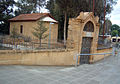 The entrance gate to Nicosia's ancient Armenian cemetery
 -
 Sourp Haroutiun chapel in Ayios Dhometios, Nicosia
 -
 View of Nicosia's second Armenian cemetery
 -
 Holy Saviour of All chapel in Acropolis, Nicosia
 -
 Shelter at Nicosia's new Armenian cemetery
 -
 View of Nicosia's new Armenian cemetery
 -
 View of Larnaca's Armenian cemetery
 -
 View of Limassol's Armenian cemetery
 -
 The "Vahram Utidjian" Hall of the Prelature, Nicosia
 -
 Old Sourp Asdvadzadzin cathedral in occupied Nicosia
 -
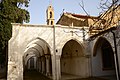 Entrance to the old Sourp Asdvadzadzin cathedral in North Nicosia
 -
 Ganchvor church in Famagusta
 -
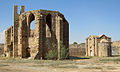 Ganchvor church in Famagusta, next to the Carmelite church
 -
 Panoramic view of Saint Makarios monastery in Halevga (1967)
 -
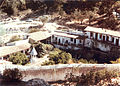 Saint Makarios monastery in Halevga (early 1970s)
 -
 Saint Makarios monastery in Halevga (current view)


.jpg)


References
[edit]- ^ Holy See of Cilicia Prelacies
- ^ "His Holiness Catholicos Aram I Appoints H.E. Archbishop Gomidas Ohanian as Pontifical Vicar to the Armenian Prelacy in Cyprus". Retrieved 2024-12-27.
- ^ Armenian Diocese of Cyprus
- ^ Hadjilyra, Alexander-Michael (2009). The Armenians of Cyprus. pp. 10–11.
- ^ Hadjilyra, Alexander-Michael (2016). The Armenians of Cyprus (PDF). pp. 8, 19, 30.
- ^ Hadjilyra, Alexander-Michael (2009). The Armenians of Cyprus. p. 27.
- ^ Hadjilyra, Alexander-Michael (2016). The Armenians of Cyprus (PDF). p. 31.
- ^ Hadjilyra, Alexander-Michael (2016). The Armenians of Cyprus (PDF). pp. 19, 31.
- ^ Hadjilyra, Alexander-Michael (2016). The Armenians of Cyprus (PDF). p. 19.
- ^ Hadjilyra, Alexander-Michael (2009). The Armenians of Cyprus. pp. 17, 25.
- ^ Hadjilyra, Alexander-Michael (2009). The Armenians of Cyprus. p. 25.
- ^ Hadjilyra, Alexander-Michael (2016). The Armenians of Cyprus (PDF). pp. 20, 30–31.
- ^ Hadjilyra, Alexander-Michael (2009). The Armenians of Cyprus. pp. 13, 25.
- ^ Hadjilyra, Alexander-Michael (2016). The Armenians of Cyprus (PDF). pp. 21, 30.
- ^ Hadjilyra, Alexander-Michael (2009). The Armenians of Cyprus. pp. 13, 25–26.
- ^ Hadjilyra, Alexander-Michael (2016). The Armenians of Cyprus (PDF). pp. 9, 21.
- ^ Hadjilyra, Alexander-Michael (2009). The Armenians of Cyprus. p. 25.
- ^ Hadjilyra, Alexander-Michael (2016). The Armenians of Cyprus (PDF). pp. 21, 30.
- ^ Hadjilyra, Alexander-Michael (2009). The Armenians of Cyprus. p. 26.
- ^ Hadjilyra, Alexander-Michael (2016). The Armenians of Cyprus (PDF). p. 20.
- ^ Hadjilyra, Alexander-Michael (2016). The Armenians of Cyprus (PDF). p. 26.
- ^ Hadjilyra, Alexander-Michael (2009). The Armenians of Cyprus. p. 26.
- ^ Hadjilyra, Alexander-Michael (2016). The Armenians of Cyprus (PDF). p. 28.
- ^ Hadjilyra, Alexander-Michael (2009). The Armenians of Cyprus. p. 26.
- ^ Hadjilyra, Alexander-Michael (2016). The Armenians of Cyprus (PDF). p. 28.
- ^ Hadjilyra, Alexander-Michael (2009). The Armenians of Cyprus. p. 31.
- ^ Hadjilyra, Alexander-Michael (2016). The Armenians of Cyprus (PDF). pp. 26, 31–32.
- ^ Hadjilyra, Alexander-Michael (2016). The Armenians of Cyprus (PDF). pp. 26, 32.
- ^ Hadjilyra, Alexander-Michael (2009). The Armenians of Cyprus. p. 31.
- ^ Hadjilyra, Alexander-Michael (2016). The Armenians of Cyprus (PDF). pp. 26, 32.
- ^ Hadjilyra, Alexander-Michael (2009). The Armenians of Cyprus. p. 31.
- ^ Hadjilyra, Alexander-Michael (2016). The Armenians of Cyprus (PDF). pp. 26, 30.
- ^ Hadjilyra, Alexander-Michael (2009). The Armenians of Cyprus. p. 31.
- ^ Hadjilyra, Alexander-Michael (2016). The Armenians of Cyprus (PDF). pp. 26, 30.