|
The current time and date is 18:25, 12 February, 2026 (UTC). —
Current articles total: 7,135,794
|
|
|
General
Contact
Useful
WP:Info
Review
|
|
|
Last peace : 05:54, 13 June 2014 (UTC)
|
|
|
|
 noframe noframe
|
|
|
|
|
A website that you should check out ...
... so, go check it out. Maybe you will have fun or learn something interesting.
|
|
|
|
Wanna listen to something? Check out these iStations ...
... maybe you will find some good sounds for your ears.
|
|
|
|
I currently favor and am listening to ...
... and it's good. You should check it out.
|
|
|
|
Wanna watch something? Check out this entertainment ...
... maybe you will find some good thoughts for your head.
|
|
|
|
Alternative free energy, in a strict sense, is energy directly transceived from the environment, and utilized without any artificial aid. In a technical sense, free energy means an energy source supplied directly by the environment in unlimited quantity (and this can not be depleted). Free energy here is equated with renewable energy, which is energy from a source which is not subject to depletion and does not include energy sources which are dependent upon limited resources. For more, see these articles ...
"Free energy" generally means that the primary energy source is "free" (i.e. does not cost anything) for consumption. Thus, free energy is the energy with no or negligible feedstock costs, including solar power (sometimes referred to as "electro-radiant energy"), telluric power, water power, and wind power. Free energy is reported in perpetual motion machines and the inquiries can be engaged in serious discussion of such machines in Free energy and perpetual motion history.
|
|
|
|
There manifests itself in the fully developed being - Man - a desire mysterious, inscrutable and irresistible: to imitate nature, to create, to work himself the wonders he perceives. Long ago he recognized that all perceptible matter comes from a primary substance, or tenuity beyond conception, filling all space, the Akasa or luminiferous aether, which is acted upon by the life giving Prana or creative force, calling into existence, in never ending cycles all things and phenomena. The primary substance, thrown into infinitesimal whirls of prodigious velocity, becomes gross matter; the force subsiding, the motion ceases and matter disappears, reverting to the primary substance.
The scientific man does not aim at an immediate result. He does not expect that his advanced ideas will be readily taken up. His work is like that of a planter for the future. His duty is to lay the foundation of those who are to come and point the way.
— Nikola Tesla
|
|
Real Name: J. D. Redding
Nickname: Reddi (Slang: ready)
Location: USA - NA - Terra - Sol
Website: The Redding Project
Gender: Male
 Books that I own will be listed, though they are not as many as the ones in the picture. Books that I own will be listed, though they are not as many as the ones in the picture.
|
... own, use, have read, or use for the rainy days will be listed below. Though this is a listing of books I had owned, not everything I had and read will I list here. The books I ...
- McWilliams, P. (1994). Life 101: Everything we wish we had learned about life in school — but didn't. Los Angeles, Calif: Prelude Press.
- Trefil, J. S. (1992). 1001 things everyone should know about science. New York: Doubleday.
- Sindermann, C. J. (1982). Winning the games scientists play. New York: Plenum Press.
- Hovenden, F. (1905). On false education. London: Watts.
- Huxley, A. (1921) Crome Yellow. (1932) Brave New World. (1958) Brave New World Revisited.
- Huxley, A. (1945). The Perennial Philosophy. Harper & Brothers.
- Dekker, T., Smeaton, W. H. O. (1620). The Pleasant Comedy of Old Fortunatus.
read and find interesting ...[edit]- Heckscher, M., & Rogalski, M. (2006). Use this book!: The only book you'll ever need. Philadelphia: Quirk Books.
- Pheby, J. A. (1995). What's that: The Oxford visual dictionary of nearly everything. New York: Tess Press.
- Bothamley, J. (1993). Dictionary of theories. London: Gale Research International.
- Reader's Digest Association. (1986). How to do just about anything. Pleasantville, N.Y.: Reader's Digest Association
- Kuper, A., & Kuper, J. (1985). The Social science encyclopedia. London: Routledge & Kegan Paul.
- Ryan, M. G. (1979). The complete encyclopedia of stitchery. Garden City, N.Y.: Doubleday.
- Institute of Electrical and Electronics Engineers, & Jay, F. (1977). IEEE standard dictionary of electrical and electronics terms. New York: Institute of Electrical and Electronics Engineers.
- Graf, R. F. (1974). Radio Shack dictionary of electronics. Fort Worth, Tex: Radio Shack.
- Encyclopaedia Britannica, inc. (1957). Encyclopedia Britannica 1957. Chicago, Ill: Encyclopaedia Britannica.
- Singer, C. J., & Williams, T. I. (1954). A History of Technology. Oxford: Clarendon Press (Volume 1 to 5)
- McClane, A. J. (1951). The Wise fishermen's encyclopedia: An encyclopedic handbook for fishermen covering the game fish of the world and how to catch them. New York: Wm. H. Wise &.
- The Lincoln library of essential information; An up-to date manual for daily reference, for self-instruction, and for general culture. (1924). Buffalo: The Frontier Press.
- Chisholm, H. (1922). The Encyclopædia britannica; the new volumes, constituting, in combination with the twenty-nine volumes of the eleventh edition, the twelfth edition of that work, and also supplying a new, distinctive, and independent library of reference dealing with events and developments of the period 1910 to 1921 inclusive. London: Encyclopædia Britannica, Co. (Volume 1 to 3)
- Hawkins electrical guide ... Questions, answers & illustrations; a progressive course of study for engineers, electricians, students and those desiring to acquire a working knowledge of electricity and its applications; a practical treatise. (1917). New York: T. Audel &. Volume 1 - 10.
- Ikenson, B. (2004). Patents : Ingenious Inventions, How They Work and How They Came to Be. Black Dog & Leventhal Publishers. 288 pages.
- United States. (2003). Soldier's manual of common tasks: Skill level 1. Field manual. Washington (d.c.): Department of the Army; Headquarters.
- Iannini, R. E. (2003). Electronic gadgets for the evil genius: 21 build-it-yourself projects. TAB electronics. New York: McGraw-Hill.
- Valone, T. (2002). Harnessing the wheelwork of nature: Tesla's science of energy. Kempton, Ill: Adventure Unlimited Press.
- Tesla, N., & Childress, D. H. (2000). The Tesla papers. Kempton, Ill: Adventures Unlimited.
- Seifer, M. J. (1998). Wizard: The life and times of Nikola Tesla : biography of a genius. New York: Citadel Press/Kensington Publishing.
- Tesla, N., & Childress, D. H. (1993). The fantastic inventions of Nikola Tesla. The Lost science series. Stelle, Ill: Adventures Unlimited.
- Wright, R. (1992). Stolen continents: The Americas through Indian eyes since 1492. Boston: Houghton Mifflin.
- Hart, M. H. (1992). The 100: A ranking of the most influential persons in history. Secausus, N.J.: Carol Pub. Group.
- Laubin, R., Laubin, G., & Vestal, S. (1989). The Indian tipi: Its history, construction, and use. Norman, Okla: University of Oklahoma Press.
- Fletcher, C., & Fletcher, C. (1984). The complete walker III: The joys and techniques of hiking and backpacking. New York: Knopf.
- Cheney, M. (1981). "Tesla: Man Out of Time". New York, Barnes & Noble Books.
- Grant, M. (1978). History of Rome. New York: Scribner's.'
- Burke, J. (1978). Connections. Boston: Little, Brown.
- Cain, A. H. (1970). Young people and revolution. New York: John Day.
- Andrews, E. B. (1914). History of the United States, Illustrated. Volume 6. Scribner's.
recommend for a rainy day ...[edit]- Adams, D. (1993). Mostly harmless. Hitchiker series ; 05. New York: Ballantine Books.
- McWilliams, P. (1990). Life 101: Everything we wish we had learned about life in school--but didn't. Los Angeles, Calif: Prelude Press.
- Adams, D., Adams, D., Adams, D., Adams, D., & Adams, D. (1991). The complete hitchhiker's guide to the galaxy. Voyager expanded book. Santa Monica, CA: Voyager.
- Tolkien, J. R. R. (1977). The Silmarillion. New York: Ballantine Books.
- Tolkien, J. R. R. (1973). The fellowship of the ring: Being the first part of The lord of the rings. The Lord of the rings, Pt. 1. New York: Ballantine Books.
- Tolkien, J. R. R. (1973). The two towers: Being the second part of The lord of the rings. The lord of the rings, Pt. 2. New York: Ballantine Books.
- Tolkien, J. R. R. (1973). The return of the king: Being the third part of The lord of the rings. The lord of the rings, Pt. 3. New York: Ballantine Books.
- Tolkien, J. R. R., & Tolkien, C. (1984). The book of lost tales: Part I. Boston: Houghton Mifflin Company.
- Lacroix, N., & Lacroix, N. (2004). The better sex guide: How to enjoy and maintain a healthy sex life in a loving relationship : the book for modern lovers everywhere. London: Hermes House.
- Lebowitz, F. (1978). Metropolitan life. New York: Dutton.
- Hallmark Cards, Inc. (1960). Poetry for pleasure; The Hallmark book of poetry. Garden City, N.Y.: Doubleday.
- Tesla, N., & Marinčić, A. (1978). Colorado Springs notes, 1899-1900. Beograd: Nolit.
- Tolkien, J. R. R. (1966). The hobbit, or, There and back again. Boston: Houghton Mifflin.
- Martin, T. C., & Tesla, N. (1894). The inventions, researches and writings of Nikola Tesla: With special reference to his work in polyphase currents and high potential lighting. New York: The Electrical Engineer.
 Websites that I use will be listed; a great deal of good information is available outside of wikimedia. Websites that I use will be listed; a great deal of good information is available outside of wikimedia.
|
... use and consult will be listed below. Though this is a listing of websites I like, not everything I have bookmarked and consult will I list here; but I will add the sites that I have in my collection as time time goes on that I like. The sites I ...
consult and use ...[edit]check for current events...[edit]News publications
Technology publications
Science publications
Government
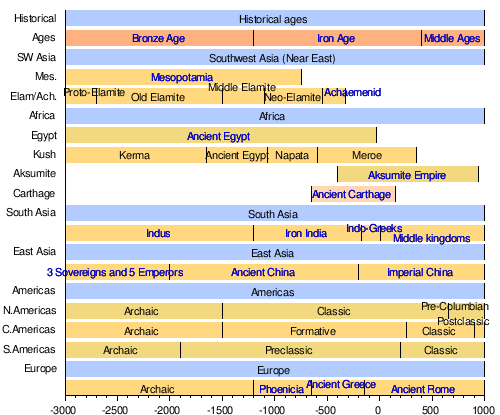
Astronomical year numbering
Dates are approximate, consult particular article for details
See also:
⟨
O
⟩
{\displaystyle \langle O\rangle }
 ,
H
^
{\displaystyle {\hat {H}}} ,
H
^
{\displaystyle {\hat {H}}}
 ,
i
2
=
j
2
=
k
2
=
i
j
k
=
−
1
{\displaystyle i^{2}=j^{2}=k^{2}=ijk=-1} ,
i
2
=
j
2
=
k
2
=
i
j
k
=
−
1
{\displaystyle i^{2}=j^{2}=k^{2}=ijk=-1}
 ,
H
{\displaystyle {\mathcal {H}}} ,
H
{\displaystyle {\mathcal {H}}}
 See also: Sun phases
Geologic Earth history[edit]Early Earth
Middle Earth
Late Earth
See also: Ordovician extinction, Age of Fish, Age of Reptiles
See also: Homo habilis (-2.33e+06 | -1.4e+06), Homo rudolfensis (-1.9e+06),
Homo gautengensis (-1.9e+06 | -0.6e+06), and Homo sapiens idaltu (-1.6e+06)
See also: Java Man (-1.75e+06), Yuanmou Man (-1.75e+06 : -0.73e+06),
Lantian Man (-1.7e+06), Nanjing Man (- 0.6e+06), Tautavel Man (- 0.5e+06),
Peking Man (- 0.4e+06), Solo Man (- 0.4e+06), and Peştera cu Oase (- 0.378e+05)
Humanity Transitions[edit]Timeframes
Dates are approximate, consult particular article for details
Holocene began at ~11,700 years BP (Before Present).
Stone Age ends ~3250 BC. Neolithic begins ~10,200 BC.
Man's Road
The Poor Man's Road to Wealth[edit]There are two ways to get rich — the right way and the wrong way; the easy way and the impossible way; the common way and the rare way. And of course the wrong and impossible way is the common way.
To be rich is to have all the money you want. And the common way of trying to get rich Is to try to get enough money for one's wants. The difficulty in this way is that the wants always grow faster than the money pile. You want to be rich enough to rent a vehicle; when you begin to rent, you want to own a vehicle; when you drive your own vehicle, you want to own a luxury vehicle; when you have a luxury vehicle, you want to own a vehicle for the children.
When a man buys railroads as other men buy vehicles, he may be in straitened circumstances, though he has fifty billions in U. S. bonds. The more money a man has, the poorer he is, if he has not learned to moderate his desires as well as to accumulate his supplies.
The only way to be rich is to keep one's desires within his Income. If one wants what five cents can buy, and he has ten cents, he is wealthy. A bright dime to a street Arab is greater wealth than a thousand dollars to a merchant prince.
The right way to be rich is never to want what you cannot buy, then you always have as much money as you want. This is the easy way. No man can regulate the contents of his purse; every man can regulate the quality of his desires. Capital is not within every man's attainment; contentment is. He is wealthy who has learned two arts; first, how to be contented with what he can get; second, how to use what he has.
It is always easy to have plenty of money : spend less than you earn. It is always easy to have all the money you want: want less than you have.
No easier way exists to better your circumstances, to become a rich man, than by joining a savings and loan association. It is the poor man's road to wealth.
|
|



.svg)


.jpg)


