
 | This article has multiple issues. Please help improve it or discuss these issues on the talk page. (Learn how and when to remove these messages)
|


 Seals showing the Indus script, an ancient undeciphered script
Undeciphered writing systems are proposed writing systems for which no decipherment has achieved broad acceptance in the specialist literature.[1] Most examples are ancient, but a small number are medieval or modern.[1] In some cases the evidence is too limited to determine whether the marks represent a true writing system, a form of proto-writing, or a set of non-linguistic symbols; modern artistic traditions such as asemic writing likewise imitate the appearance of writing while intentionally withholding stable linguistic meaning.[2]
Difficulties in decipherment commonly arise from one or more of the following: the absence of bilingual texts or other external “anchors” (such as securely identifiable names or dates); uncertain or unknown underlying languages (including possible language isolates); small corpora; and damage or loss of archaeological context needed to test proposed readings against use and genre.[1] In some corpora, an additional difficulty is uncertainty over whether the signs constitute writing at all (as has often been argued for the Vinča symbols).[3]
Various decipherment claims have been proposed for several items listed here (including the Indus script, the Phaistos Disc, and the Isthmian/Epi-Olmec script), but these proposals remain disputed and have not achieved broad acceptance in the scholarly literature unless otherwise noted.[4][5]
Inclusion criteria
[edit]This list includes writing systems and sign systems that are commonly described in reliable secondary sources as undeciphered, not fully deciphered, or of uncertain decipherment. Items of disputed authenticity or disputed status as writing are explicitly identified as such.
Proto-writing
[edit]Certain forms of proto-writing remain undeciphered and, because of limited evidence and uncertain linguistic affiliation, may never be deciphered.
Neolithic signs in China
[edit]Yellow River civilization
[edit]- Jiahu symbols – Peiligang culture, China, c. 6600 – c. 6200 BCE.[6][7]
- Damaidi symbols – Damaidi, China; earliest estimated dates range from the Paleolithic to approximately 3000 years ago.[citation needed]
- Dadiwan symbols – Dadiwan, China, c. 5800 – c. 5400 BCE.[citation needed]
- Banpo symbols – Yangshao culture, China, 5th millennium BCE.[8]
- Jiangzhai symbols – Yangshao culture, China, 4th millennium BCE.[citation needed]
- Dawenkou symbols – Dawenkou culture, c. 2800 – c. 2500 BCE.[9]
- Longshan symbols – Longshan culture, China, c. 2500 – c. 1900 BCE.[10][11][12]
Yangtze civilization
[edit]- Wucheng symbols – Wucheng culture, China, c. 1600 BCE.[citation needed]
Other areas
[edit]- Sawveh – Guangxi, China; reported as possible proto-writing or writing in some local traditions and secondary sources; status as a historical writing system is uncertain.[12]
-
 Jiahu symbols
 -
 Banpo symbols
 -
 Longshan symbols
 -
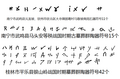 Sawveh


Neolithic signs in Europe
[edit]- Vinča symbols – Neolithic Europe (Central and Southeastern Europe), c. 4500 – c. 4000 BCE. Often treated as proto-writing or symbolic marks rather than confirmed writing.[13][14]
-
 Vinča symbols

Asian scripts
[edit]South Asia
[edit]- Indus script – c. 2800 – c. 1900 BCE.[15][16][17]
- Vikramkhol inscription – c. 1500 BCE.[citation needed]
- Megalithic graffiti symbols – c. 1000 BCE – c. 300 CE; proposed as possible writing and sometimes hypothesized as related to the Indus tradition, though this remains debated.[18]
- Pushkarasari script – Gandhara, 3rd century BCE to 8th century CE.[citation needed]
- Shankhalipi – c. 4th – c. 8th century CE.[citation needed]
-
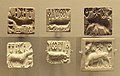 Indus script
 -
 Vikramkhol inscription
 -
 Pushkarasari script
 -
 Shankhalipi


West Asia
[edit]- Proto-Elamite script – c. 3100 – c. 2900 BCE.[19]
- Jiroft script – c. 2200 BCE.[citation needed]
- Byblos syllabary – Byblos, c. 1700 BCE.[citation needed]
- Trojan script – Troy (Early Bronze Age); status disputed and it is unclear whether the marks constitute a single writing system or writing at all.[20]
-
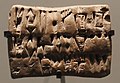 Proto-Elamite script
 -
 Byblos syllabary


East Asia
[edit]- Ba–Shu scripts – 5th to 4th century BCE.[citation needed]
- Khitan large script and Khitan small script – Khitan, 10th century; partially understood but not fully deciphered.[citation needed]
-
 Ba script
 -
 Khitan large script
 -
 Khitan small script


- Singapore Stone – fragment of a sandstone slab inscribed with an ancient Southeast Asian script, possibly Old Javanese or Sanskrit; at least 13th century, possibly as early as 10th–11th century.[citation needed]
-
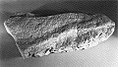 Singapore Stone

Central Asia
[edit]- Oxus script – c. 2200 BCE.[citation needed]
- Issyk inscription – Kazakhstan, c. 4th century BCE.[citation needed]
- Kushan script – c. 2nd century BCE – c. 7th century CE; partially deciphered, with recent proposals identifying a substantial portion of the sign inventory and phonetic values in the scholarly literature.[21]
-
 Issyk inscription

European scripts
[edit].jpg) Page 32 of the Voynich manuscript, a medieval manuscript written with an undeciphered writing system
Page 32 of the Voynich manuscript, a medieval manuscript written with an undeciphered writing system
- Cretan hieroglyphs – c. 2100 BCE.[22][23][24]
- Linear A – c. 1800 – c. 1450 BCE; the sign values are often transcribed using correspondences with Linear B, but the underlying language remains unknown and most texts are not understood.[25]
- Phaistos Disc – c. 1850 – c. 1300 BCE; no consensus decipherment, though numerous proposals exist.[26][27]
- Cypro-Minoan syllabary – c. 1550 BCE.[28]
- Grakliani Hill script – Grakliani Hill, c. 11th – c. 10th century BCE.[citation needed]
- Paleohispanic scripts – several scripts are partly deciphered (sign values largely known), but many inscriptions and underlying languages remain only partly understood; inclusion and degree of decipherment vary by script.[citation needed]
- Southwest Paleohispanic script – from c. 700 BCE.[29]
- Sitovo inscription – c. 300 – c. 100 BCE.[30]
- Alekanovo inscription – c. 10th – c. 11th century CE.[citation needed]
- Rohonc Codex – 17th–19th centuries.[citation needed]
- Voynich manuscript – radiocarbon dated (parchment) to the early 15th century.[31]
- An inscription in the Pisa Baptistery – a short medieval religious inscription attested in Tuscany; the script/language and interpretation remain debated in the literature.[32]
-
 Cretan hieroglyphs
 -
 Phaistos disc
 -
 Linear A
 -
 Cypro-Minoan syllabary
 -
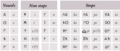 Southwest Paleohispanic script
 -
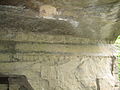 Sitovo inscription


.png)

African scripts
[edit]North Africa
[edit]- The Starving of Saqqara – a privately held sculpture claimed to be ancient and bearing an unidentified inscription; provenance and authenticity have been questioned, and the markings are not securely established as an ancient writing system.[33]
- Wadi el-Hol inscriptions – Egypt; early alphabetic inscriptions (often dated to the late Middle Kingdom, roughly early 2nd millennium BCE) with proposed readings but no universally accepted full decipherment; frequently discussed in relation to Proto-Sinaitic script.[34][35]
Sub-Saharan Africa
[edit]- Eghap script – Cameroon, c. 1900; partially deciphered.[citation needed]
- Ancient inscriptions in Somalia – inscriptions reported on Taalo Tiiriyaad structures; independent archaeological verification and interpretation vary in the literature.[36]
American scripts
[edit]Andean region
[edit]- Quipu – used in the Inca Empire and predecessor states (e.g., Huari, Paracas, Caral–Supe), and in some contexts into the modern period. Quipu are widely accepted as record-keeping devices; whether they constitute “writing” (and what kind) remains debated. Some recent work argues that certain colonial-era quipu corpora show features consistent with logosyllabic encoding and proposes tentative readings of specific elements, but this remains an active research area rather than a settled decipherment.[37]
-
 Quipu
Quipu

Mesoamerica
[edit]- Olmec hieroglyphs – c. 1000 – c. 400 BCE; sometimes proposed as a “mother script” in broader origin theories, though the evidence and relationships remain debated.[38]
- Zapotec hieroglyphs – c. 500 BCE – c. 800 CE; often described as logosyllabic, with varying degrees of interpretation.[citation needed]
- Ñuiñe hieroglyphs – c. 400 – c. 800 CE; similar to Zapotec and possibly an offshoot in the Mixteca Baja; often described as logosyllabic.[citation needed]
- Isthmian (Epi-Olmec) script – c. 400 BCE – c. 500 CE; partial readings have been proposed, but the overall decipherment remains disputed.[citation needed]
- Izapan hieroglyphs – Late Preclassic; often proposed as related to Isthmian traditions and later Maya developments; status remains uncertain.[39]
- Teotihuacan hieroglyphs – c. 100 BCE – c. 700 CE; sometimes described as a logosyllabary; its relationship to other traditions is debated.[citation needed]
- Classic Gulf Coast hieroglyphs – Early Classic to Early Postclassic; often discussed as related to central Mexican traditions.[40]
- Cotzumalhuapa hieroglyphs – c. 0 – c. 1000 CE; sometimes discussed as influenced by Teotihuacan traditions; interpretation remains limited.[citation needed]
- Epiclassic/Early Postclassic hieroglyphs of Xochicalco, Cacaxtla, Teotenango, Tula and Chichén Itzá – generally treated as part of broader regional glyphic traditions; many elements remain only partially understood.[41]
Many Mesoamerican glyphic traditions remain only partly understood, with the Classic/Lowland Maya script being the best-attested and most extensively deciphered. Other regional traditions (including those often grouped under “Mixteca-Puebla” or pictorial-historical codex traditions) are interpreted in the literature to varying extents, but do not have a single universally accepted “decipherment” comparable to Classic Maya.
-
 La Venta Stele 19
 -
 Olmec colossal head in La Venta (possible name glyph on forehead)
 -
 Zapotec script
 -
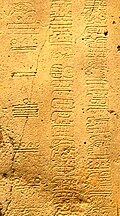 Isthmian/Epi-Olmec inscription
 -
 Izapan tradition (Tak'alik Ab'aj)
 -
 Cotzumalhuapa tradition
.jpg)


Oceanian scripts
[edit]- Kōhau Rongorongo – Rapa Nui. Attested by the 19th century; often hypothesized to encode language but remains undeciphered.[citation needed]
-
 Kōhau Rongorongo
_edit1.jpg)
Texts that are not writing systems
[edit]A related concept is that of false writing systems, which appear to be writing but are not. False writing cannot be deciphered because it has no stable semantic meaning. This includes many forms of asemic writing created for artistic purposes. A prominent example is the Codex Seraphinianus.
Another related concept is that of undeciphered cryptograms or cipher messages. These are not writing systems per se, but enciphered forms of texts written in known systems. Some have become famous and are listed in list of ciphertexts.
References
[edit]- ^ a b c Adiego, Ignasi-Xavier (2024). "Deciphering a Writing System: Luck, Intuition, or Method?". In Ferrara, Silvia; Montecchi, Barbara; Valério, Miguel (eds.). Writing from Invention to Decipherment. Oxford University Press. pp. 107–139. doi:10.1093/oso/9780198908746.003.0007. Retrieved 2026-02-07.
- ^ Schwenger, Peter (2019). Asemic: The Art of Writing. University of Minnesota Press. ISBN 978-1-5179-0697-9. Retrieved 2026-02-07.
- ^ Lazarovici, Gheorghe; Merlini, Marco (2016). "Tărtăria Tablets: The Latest Evidence in an Archaeological Thriller". In Nikolova, Lolita (ed.). Western-Pontic Culture Ambience and Pattern: In Memory of Eugen Comsa. Warsaw, Poland: De Gruyter Open Poland. pp. 53–142.
- ^ Kenoyer, J. M. (2006). "The Origin, Context and Function of the Indus Script: Recent Insights from Harappa". In Osada, Toshiki (ed.). Proceedings of the Pre-symposium and the 7th ESCA Harvard–Kyoto Roundtable (PDF). Kyoto: Research Institute for Humanity and Nature. pp. 9–27. Retrieved 2026-02-07.
- ^ Baldacci, Giorgia (2024). "The Phaistos Disc: Placing an Enigmatic Artefact in its Cultural Context". In Ferrara, Silvia; Montecchi, Barbara; Valério, Miguel (eds.). Writing from Invention to Decipherment. Oxford University Press. pp. 155–170. doi:10.1093/oso/9780198908746.003.0009. Retrieved 2026-02-07.
- ^ Zhang, Juzhong; Cui, Qilong (2013). "The Jiahu Site in the Huai River Area". In Underhill, Anne P. (ed.). A Companion to Chinese Archaeology. John Wiley & Sons. p. 248. ISBN 978-1-118-32578-0.
- ^ Demattè, Paola (2022). "Early and Middle Neolithic Signs to the Fourth Millennium BCE". The Origins of Chinese Writing. Oxford University Press. pp. 99–148. doi:10.1093/oso/9780197635766.003.0005. ISBN 9780197635766.
- ^ Woon, Wee Lee (1987). 漢字的原始和演變 [Chinese Writing: Its Origin and Evolution] (in Chinese). Macau: University of East Asia. pp. 275–276.
- ^ Qiu, Xigui (2000) [1988]. Chinese Writing. Translated by Mattos, Gilbert L.; Norman, Jerry. Berkeley: Society for the Study of Early China and The Institute of East Asian Studies, University of California. p. 33. ISBN 978-1-55729-071-7.
- ^ Tan, Shengmin (2003). 壮泰民族传统文化比较研究 [A Comprehensive Comparative Study on Zhuang and Thai Nationalities' Traditional Culture] (in Chinese). Vol. II. Guangxi People's Publishing House. pp. 798–799. ISBN 978-7-219-04915-0.
- ^ Liang, Tingwang (2000). 壮族文化概论 [Overview of the Culture of the Zhuang People] (in Chinese). Guangxi Educational Publishing House. pp. 496–498. ISBN 978-7-5435-2992-2.
- ^ a b Encyclopedia of the Zhuang Ethnicity Editorial Committee (April 1993). "本源书" [Sawgoek]. 壮族百科辞典 [Encyclopedia of the Zhuang Ethnicity] (in Chinese). Guangxi People's Publishing House. ISBN 978-7-219-02476-8.
- ^ Lazarovici, Gheorghe; Merlini, Marco (2016). "Tărtăria Tablets: The Latest Evidence in an Archaeological Thriller". In Nikolova, Lolita (ed.). Western-Pontic Culture Ambience and Pattern: In Memory of Eugen Comsa. Warsaw, Poland: De Gruyter Open Poland. pp. 53–142.
- ^ Owens, Gareth A. (1999). "Balkan Neolithic Scripts". Kadmos. 38 (1–2): 114–120. doi:10.1515/kadm.1999.38.1-2.114. S2CID 162088927.
- ^ Shinde, Vasant; Willis, Rick J. (2014). "A New Type of Inscribed Copper Plate from Indus Valley (Harappan) Civilisation" (PDF). Ancient Asia. 5. doi:10.5334/aa.12317.
- ^ Bryant, Edwin Francis (2001). The Quest for the Origins of Vedic Culture: The Indo-Aryan Migration Debate. Oxford University Press. p. 178. doi:10.1093/0195137779.001.0001. ISBN 978-0-19-513777-4.
- ^ Kenoyer, J. M. (2006). "The Origin, Context and Function of the Indus Script: Recent Insights from Harappa". In Osada, Toshiki (ed.). Proceedings of the Pre-symposium and the 7th ESCA Harvard–Kyoto Roundtable (PDF). Kyoto: Research Institute for Humanity and Nature. pp. 9–27. Retrieved 2022-06-25.
- ^ Lal, B. B. (1962). "From the Megalithic to Harappa: Tracing Back the Graffiti on the Pottery". Ancient India: Bulletin of the Archaeological Survey of India. 16: 21–24.
- ^ Yeganeh, Sepideh Jamshidi; Holakooei, Parviz; Nokandeh, Jebrael; Piran, Sedigheh; Dahl, Jacob L. (2025). "Complexity of proto-elamite administration system: Insights from compositional data from sealings and tablets". Journal of Archaeological Science: Reports. 61 104973. Bibcode:2025JArSR..61j4973J. doi:10.1016/j.jasrep.2025.104973.
- ^ Waal, Willemijn (2017). "How to Read the Signs: The Use of Symbols, Markings and Pictographs in Bronze Age Anatolia". In Jasink, Anna Margherita; Weingarten, Judith; Ferrara, Silvia (eds.). Non-scribal Communication Media in the Bronze Age Aegean and Surrounding Areas: The Semantics of a-literate and Proto-literate Media. Firenze University Press. pp. 111–129.
- ^ Carrara, Elisa; Stolbunova, Vera; de la Vaissière, Étienne (2023). "The decipherment of the 'unknown Kushan' script". Transactions of the Philological Society. doi:10.1111/1467-968X.12255.
- ^ Civitillo, Matilde; Ferrara, Silvia; Meissner, Torsten (2024). "Introduction". The Earliest Script on Crete: Semiotics, Linguistics, Archaeology and Palaeography, Cretan Hieroglyphic (PDF). Cambridge University Press. pp. 1–12.
- ^ Yule, Paul (1981). Early Cretan Seals: A Study of Chronology. Marburger Studien zur Vor- und Frühgeschichte 4. Mainz. doi:10.11588/diglit.3044. ISBN 3-8053-0490-0.
}: CS1 maint: location missing publisher (link) - ^ Castleden, Rodney (2002). Minoans: Life in Bronze Age Crete. Routledge. p. 100. ISBN 978-1-134-88064-5.
- ^ Salgarella, Ester (2022). "Linear A". Oxford Classical Dictionary. Oxford University Press. doi:10.1093/acrefore/9780199381135.013.8927 (inactive 8 February 2026). ISBN 978-0-19-938113-5.
}: CS1 maint: DOI inactive as of February 2026 (link) - ^ Duhoux, Yves (1977). Le disque de Phaestos [The Phaistos Disc] (in French). Leuven.
}: CS1 maint: location missing publisher (link) - ^ Achterberg, Winfried; Best, Jan; Enzler, Kees; Rietveld, Lia; Woudhuizen, Fred (2004). The Phaistos Disc: A Luwian Letter to Nestor. Publications of the Henry Frankfort Foundation. Vol. 13. ISBN 978-90-72067-11-1.
- ^ Palaima, Thomas G. (1989). "Cypro-Minoan Scripts: Problems of Historical Context". In Duhoux, Yves; Palaima, Thomas G.; Bennet, John (eds.). Problems in Decipherment. Louvain-La-Neuve: Peeters. pp. 121–188. ISBN 90-6831-177-8.
- ^ Valério, Miguel (2014). "The Interpretative Limits of the Southwestern Script". Journal of Indo-European Studies. 42 (3/4): 439–467. ProQuest 1628229756.
- ^ Vassileva, Maya (1999). "A Few Phrygian Onomastic Notes". Epigraphica Anatolica. 31: 175–180. ISSN 0174-6545.
- ^ Stolte, Daniel (2011-02-10). "Experts determine age of book 'nobody can read'". Phys.org. Retrieved 2026-02-07.
- ^ Vicari, Stefano; Perono Cacciafoco, Francesco (2023). "A Puzzling Religious Inscription from Medieval Tuscany: Symbology and Interpretation". Histories. 3 (3): 219–230. doi:10.3390/histories3030015.
- ^ "CSI Montreal: Concordia sculpture investigation: Rare find or modern forgery?". EurekAlert!. 2011-03-16. Retrieved 2026-02-07.
- ^ Darnell, John Coleman (May 2013). "Wadi el-Hôl". UCLA Encyclopedia of Egyptology. Retrieved 2026-02-07.
- ^ "Two Early Alphabetic Inscriptions from the Wadi el-Hol: New Evidence for the Origin of the Alphabet from the Western Desert of Egypt". Yale University, Near Eastern Languages & Civilizations. 2006. Retrieved 2026-02-07.
- ^ Ministry of Information and National Guidance (Somalia) (1974). The Writing of the Somali Language: A Great Landmark in Our Revolutionary History. Mogadishu: Ministry of Information and National Guidance.
- ^ Hyland, Sabine (2017). "Writing with Twisted Cords: The Inscriptive Capacity of Andean Khipus" (PDF). Current Anthropology. 58 (3): 412–419. doi:10.1086/691682.
- ^ Uriarte, María Teresa (2018). Olmecas (in Spanish). Universidad Nacional Autónoma de México. ISBN 978-88-16-60514-5.
- ^ Pool, Christopher (2007-02-26). Olmec Archaeology and Early Mesoamerica. Cambridge University Press. ISBN 978-0-521-78312-5.
- ^ Peregrine, Peter N.; Ember, Melvin (2012-12-06). Encyclopedia of Prehistory: Volume 5: Middle America. Springer Science & Business Media. ISBN 978-1-4615-0525-9.
- ^ Clemmensen, Mikkel Bøg; Helmke, Christophe (2023-06-08). Western Mesoamerican Calendars and Writing Systems: Proceedings of the Copenhagen Roundtable. Archaeopress Publishing Ltd. ISBN 978-1-80327-486-7.