
 | This article has multiple issues. Please help improve it or discuss these issues on the talk page. (Learn how and when to remove these messages)
|


Pärnu | |
|---|---|
From top: Pärnu city centre; Red tower; Elisabeth church; downtown; Pärnu central beach | |
| Coordinates: 58°23′N 24°30′E / 58.383°N 24.500°E | |
| Country |  Estonia Estonia |
| County |  Pärnu Pärnu |
| Founded | 1251 |
| Area | |
• Total | 32.22 km2 (12.44 sq mi) |
| Elevation | 10 m (33 ft) |
| Population (2024) | |
• Total | 41,520[1] |
| • Rank | 4th |
| • Density | 1,289/km2 (3,338/sq mi) |
| Ethnicity | |
| • Estonians | 83.7% |
| • Russians | 10.6% |
| • other | 5.7% |
| Time zone | UTC+2 (EET) |
| • Summer (DST) | EEST |
.jpg)
.JPG)


.png)
Pärnu (Estonian pronunciation: [ˈpærˑnu]) is a city in southwest Estonia. Pärnu is located 128 kilometres (80 mi) south of the Estonian capital, Tallinn, and 176 kilometres (109 mi) west of Estonia's second-largest city, Tartu. The city sits off the coast of Pärnu Bay, an inlet of the Gulf of Riga, which is a part of the Baltic Sea. In the city, the Pärnu River drains into the Gulf of Riga.
Pärnu is a popular summer holiday resort town among Estonians with many hotels, restaurants and large beaches. The city is served by Pärnu Airport.
History
[edit] Pärnu in 1554
Pärnu or Old Pärnu (Latin: Perona, German: Pernau, Alt-Pernau, Estonian: Vana-Pärnu), which was founded by the bishop of Ösel–Wiek c. 1251, suffered heavily under pressure of the concurrent town, and was finally destroyed c. 1600. Another town, Embeke (later German: Neu-Pernau, Estonian: Uus-Pärnu) was founded by the Teutonic Order, who began building an ordensburg nearby in 1265. The latter town, then known by the German name of Pernau, was a member of the Hanseatic League and an important ice-free harbor for Livonia.
Pärnu belonged to the Governorate of Livonia of the Russian Empire until 1917, when it was transferred to the short-lived autonomous Governorate of Estonia.
The Polish–Lithuanian Commonwealth took control of town between 1560 and 1617; the Poles and Lithuanians fought the armies of the Kingdom of Sweden nearby in 1609. Sweden took control of the town during the 1558-1583 Livonian War and it became part of Swedish Livonia.
The Academia Gustavo-Carolina (predecessor of modern University of Tartu) was relocated from Tartu (Dorpat) to Pärnu in 1699, and operated there until 1710. The university has still maintained a branch campus in Pärnu to this day (1,000 students in the 2004/2005 school year).[2]
During the 1700-1721 Great Northern War, the Kingdom of Sweden then lost Pärnu along with the rest of Livonia to the Tsardom of Russia in the 1710 Capitulation of Estonia and Livonia and the 1721 Treaty of Nystad, following the Great Northern War; the city also bore the name Пернов, Pernov—an "adapted" German name—among the Russians.[3]
Pärnu belonged to the Governorate of Livonia of the Russian Empire until 1917, when it was transferred to the short-lived autonomous Governorate of Estonia.
The city became part of independent Estonia in 1918 following World War I. During World War II, Estonia was invaded and occupied by the Soviet army in June 1940. Estonia (and Pärnu) was occupied by Nazi Germany from 1941 until 1944. After the war, Pärnu was part of Soviet-occupied Estonia until 1991, when Estonia restored its independence.
Geography
[edit]Districts of Pärnu
[edit]There are seven districts in Pärnu: Ülejõe, Rääma, Vana-Pärnu, Kesklinn, Rannarajoon, Eeslinn and Raeküla.[4]
Climate
[edit]Pärnu lies within the temperate humid continental climate zone.
| Climate data for Pärnu (normals 1991–2020, extremes 1842–present) | |||||||||||||
|---|---|---|---|---|---|---|---|---|---|---|---|---|---|
| Month | Jan | Feb | Mar | Apr | May | Jun | Jul | Aug | Sep | Oct | Nov | Dec | Year |
| Record high °C (°F) | 9.0 (48.2) |
8.3 (46.9) |
19.6 (67.3) |
26.2 (79.2) |
31.2 (88.2) |
32.6 (90.7) |
34.1 (93.4) |
33.4 (92.1) |
28.0 (82.4) |
22.4 (72.3) |
12.6 (54.7) |
10.3 (50.5) |
34.1 (93.4) |
| Mean daily maximum °C (°F) | −0.8 (30.6) |
−1 (30) |
3.0 (37.4) |
10.2 (50.4) |
16.7 (62.1) |
20.2 (68.4) |
23.0 (73.4) |
21.8 (71.2) |
16.6 (61.9) |
9.9 (49.8) |
4.3 (39.7) |
1.1 (34.0) |
10.4 (50.7) |
| Daily mean °C (°F) | −3.0 (26.6) |
−3.7 (25.3) |
−0.5 (31.1) |
5.4 (41.7) |
11.4 (52.5) |
15.4 (59.7) |
18.3 (64.9) |
17.2 (63.0) |
12.5 (54.5) |
6.8 (44.2) |
2.2 (36.0) |
−0.9 (30.4) |
6.8 (44.2) |
| Mean daily minimum °C (°F) | −5.5 (22.1) |
−6.6 (20.1) |
−3.7 (25.3) |
1.2 (34.2) |
6.1 (43.0) |
10.7 (51.3) |
13.6 (56.5) |
12.8 (55.0) |
8.6 (47.5) |
3.8 (38.8) |
0.0 (32.0) |
−3.1 (26.4) |
3.2 (37.8) |
| Record low °C (°F) | −34.8 (−30.6) |
−34.3 (−29.7) |
−28.5 (−19.3) |
−19.7 (−3.5) |
−5.3 (22.5) |
−0.1 (31.8) |
3.4 (38.1) |
2.6 (36.7) |
−4.7 (23.5) |
−10.9 (12.4) |
−22.2 (−8.0) |
−34.5 (−30.1) |
−34.8 (−30.6) |
| Average precipitation mm (inches) | 61 (2.4) |
49 (1.9) |
43 (1.7) |
40 (1.6) |
39 (1.5) |
78 (3.1) |
74 (2.9) |
84 (3.3) |
61 (2.4) |
83 (3.3) |
73 (2.9) |
71 (2.8) |
761 (30.0) |
| Average precipitation days (≥ 1.0 mm) | 12.6 | 10.4 | 9.5 | 8.4 | 7.7 | 9.7 | 9.6 | 10.4 | 9.6 | 12.2 | 13.5 | 14.0 | 127.6 |
| Average relative humidity (%) | 88 | 87 | 81 | 73 | 68 | 73 | 75 | 78 | 82 | 86 | 89 | 89 | 81 |
| Mean monthly sunshine hours | 38.8 | 69.6 | 148.2 | 210.1 | 300.3 | 293.5 | 306.4 | 258.6 | 172.8 | 95.5 | 36.5 | 24.3 | 1,950.2 |
| Source: Estonian Weather Service[5][6][7][8][9][10][11] | |||||||||||||
| Coastal temperature data for Pärnu | |||||||||||||
|---|---|---|---|---|---|---|---|---|---|---|---|---|---|
| Month | Jan | Feb | Mar | Apr | May | Jun | Jul | Aug | Sep | Oct | Nov | Dec | Year |
| Average sea temperature °C (°F) | 0.4 (32.72) |
0.0 (32.00) |
-0.1 (31.82) |
1.9 (35.42) |
7.7 (45.86) |
14.7 (58.46) |
19.4 (66.92) |
19.1 (66.38) |
15.9 (60.62) |
10.7 (51.26) |
6.7 (44.06) |
3.6 (38.48) |
8.3 (47.00) |
| Source 1: Seatemperature.org[12] | |||||||||||||
Waterbodies
[edit]Pärnu River, Sauga River, Reiu River, Pärnu Moat, Pärnu Bay. Pärnu Moat was previously a part of Pärnu Fortress. Nowadays, it is mainly used as a venue for different events.[13]
Demographics
[edit]| Year | 1881 | 1897 | 1922 | 1934 | 1959 | 1970 | 1979 | 1989 | 2000 | 2011 | 2012 | 2017 | 2021 |
|---|---|---|---|---|---|---|---|---|---|---|---|---|---|
| Population | 12,966 | 12,898 | 18,499 | 20,334 | 22,367 | 50,224 | 54,051 | 53,885 | 45,500 | 39,728 | 40,401 | 40,700 | 40,228 |
| Ethnicity | 1922[14] | 1934[15] | 1941[16] | 1959[17] | 1970[18] | 1979[19] | 1989[19] | 2000[20] | 2011[21] | 2021[22] | ||||||||||
|---|---|---|---|---|---|---|---|---|---|---|---|---|---|---|---|---|---|---|---|---|
| amount | % | amount | % | amount | % | amount | % | amount | % | amount | % | amount | % | amount | % | amount | % | amount | % | |
| Estonians | 16440 | 89.0 | 18436 | 90.7 | 18370 | 96.7 | 26669 | 73.9 | 34370 | 74.2 | 36748 | 74.1 | 37939 | 72.4 | 36112 | 79.4 | 33000 | 83.1 | 33682 | 83.7 |
| Russians | 494 | 2.67 | 469 | 2.31 | 328 | 1.73 | – | – | 9146 | 19.7 | 9676 | 19.5 | 10753 | 20.5 | 6951 | 15.3 | 5076 | 12.8 | 4256 | 10.6 |
| Ukrainians | – | – | 7 | 0.03 | – | – | – | – | 1010 | 2.18 | 1255 | 2.53 | 1631 | 3.11 | 966 | 2.12 | 671 | 1.69 | 887 | 2.20 |
| Belarusians | – | – | – | – | – | – | – | – | 412 | 0.89 | 493 | 0.99 | 546 | 1.04 | 297 | 0.65 | 179 | 0.45 | 184 | 0.46 |
| Finns | – | – | 14 | 0.07 | 11 | 0.06 | – | – | 517 | 1.12 | 543 | 1.09 | 534 | 1.02 | 331 | 0.73 | 254 | 0.64 | 324 | 0.81 |
| Jews | 236 | 1.28 | 248 | 1.22 | 0 | 0.00 | – | – | 190 | 0.41 | 138 | 0.28 | 76 | 0.15 | 35 | 0.08 | 20 | 0.05 | 13 | 0.03 |
| Latvians | – | – | 143 | 0.70 | 88 | 0.46 | – | – | 135 | 0.29 | 165 | 0.33 | 150 | 0.29 | 85 | 0.19 | 65 | 0.16 | 128 | 0.32 |
| Germans | 1030 | 5.57 | 871 | 4.28 | – | – | – | – | – | – | 105 | 0.21 | 132 | 0.25 | 69 | 0.15 | 50 | 0.13 | 55 | 0.14 |
| Tatars | – | – | 0 | 0.00 | – | – | – | – | – | – | 76 | 0.15 | 103 | 0.20 | 45 | 0.10 | 33 | 0.08 | 31 | 0.08 |
| Poles | – | – | 34 | 0.17 | 26 | 0.14 | – | – | – | – | 108 | 0.22 | 81 | 0.15 | 60 | 0.13 | 35 | 0.09 | 37 | 0.09 |
| Lithuanians | – | – | 10 | 0.05 | 6 | 0.03 | – | – | 60 | 0.13 | 80 | 0.16 | 83 | 0.16 | 82 | 0.18 | 60 | 0.15 | 58 | 0.14 |
| unknown | 0 | 0.00 | 28 | 0.14 | 8 | 0.04 | 0 | 0.00 | 0 | 0.00 | 0 | 0.00 | 0 | 0.00 | 226 | 0.50 | 59 | 0.15 | 129 | 0.32 |
| other | 281 | 1.52 | 74 | 0.36 | 167 | 0.88 | 9398 | 26.1 | 476 | 1.03 | 236 | 0.48 | 361 | 0.69 | 241 | 0.53 | 226 | 0.57 | 444 | 1.10 |
| Total | 18481 | 100 | 20334 | 100 | 19004 | 100 | 36067 | 100 | 46316 | 100 | 49623 | 100 | 52389 | 100 | 45500 | 100 | 39728 | 100 | 40228 | 100 |
Economy
[edit]Significant flows of exports from Pärnu region and South-Estonia pass through the Port of Pärnu which lies at the mouth of the Pärnu River. In recent years, the port has developed into an important regional harbour for south-western and southern Estonia. Pärnu's fame as a rehabilitation and holiday resort dates back to the middle of the 19th century. The foundation of the first bathing facility in 1838 is considered the birth date of Pärnu resort. Today Pärnu has all desirable qualities of a modern holiday resort – it has spas and rehabilitation centres, hotels, conference and concert venues, golf courses and tennis courts, restaurants and pubs. It's long tradition as a resort has made Pärnu well known in Finland and Scandinavian countries.
Tourism
[edit]
The majority of the tourists in Pärnu are Estonians, Finns and Swedes. In 1837, a tavern near the beach was made into a bathing establishment. The establishment accommodated 5–6 bathrooms that provided hot seawater baths in summer and operated as a sauna in winter. The wooden building was burnt down in the course of World War I. In 1927, the present stone building of Pärnu Mud Baths was erected at the same site. Kursaal hall dating from 1880 which is close by is used for concerts.[23] Since 1996 Pärnu has been known as Estonia's Summer Capital.[24][25]
Starting from 2015 the city of Pärnu hosts the annual Weekend Festival, the largest dance music festival in the Nordic and Baltic region. Stages are headlined by DJs from across the electronic dance music spectrum, with audiovisual support. Some of the past and upcoming artists to perform include Martin Garrix, David Guetta, Avicii, Steve Aoki, The Chainsmokers, Tiësto, Armin van Buuren, Hardwell, Robin Schulz, Afrojack, deadmau5, Knife Party, Desiigner and many more. Pärnu is also known for its seawall. According to legend, if a couple holds hands while journeying along the wall and kisses at its endpoint they will stay together forever.[26]
Notable people
[edit]- Elisabeth Aspe, writer
- Gustav Fabergé, jeweller
- Johann Voldemar Jannsen, journalist and poet
- Lili Kaelas, archeologist
- Tõnis Kasemets, race-car driver who has competed in ChampCar and IMSA
- Rein Kask, politician
- Egon Kaur, rally driver
- Paul Keres, chess grandmaster
- Lydia Koidula, poet
- Ilmi Kolla, poet
- Kaie Kõrb, prima ballerina
- Jüri Kukk, professor of chemistry, dissident, and political prisoner
- Karin Luts, artist
- Friedrich Martens, lawyer
- Kaili Närep, actress
- Rene Pais, professionally known as Syn Cole, DJ and musician
- Liisa Pulk, actress
- Rasmus Rändvee, singer
- Salme Reek, actress
- Georg Wilhelm Richmann, German physicist
- Erika Salumäe, track bicycle racer
- David Samoylov, poet
- August Sang, poet
- Olev Siinmaa, architect
- David Shrayer-Petrov, poet, fiction writer, translator, medical scientist
- Maxim D. Shrayer, author and literary scholar
- Lilli Suburg, writer
- Avo Sõmer, musicologist, music theorist, composer
- Kristin Tattar, athlete, disc golf world champion
Honorary citizens
[edit]- 1886 Konstantin Possiet
- 1901 Friedrich Fromhold Martens
- 1934 Konstantin Päts
- 2007 Neeme Järvi
- 2008 Valter Ojakäär
- 2009 Jüri Jaanson
- 2017 Arbo Valdma
- 2024 Olaf Esna
Gallery
[edit]-
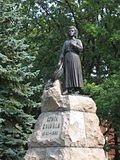 Monument to poet Lydia Koidula (by Amandus Adamson)
 -

-
 Kursaal hall dating from 1880
 -
 Sunset in Pärnu beach
 -
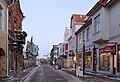 Rüütli street in Pärnu
 -
 Pärnu mud baths
 -
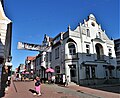 A street view
 -
 In 1857, the first Estonian weekly newspaper Perno Postimees began to be published in Pärnu.
 -
 The building of the Endla Theatre, where the Estonian Declaration of Independence was first publicly proclaimed on 23 February 1918.
 -
 Crowd gathering in front of the Endla Theatre in Pärnu to listen to the Estonian Declaration of Independence in February 1918.


.jpg)


See also
[edit]References
[edit]- ^ "Statistikaamet". Retrieved 10 October 2019.
- ^ University of Tartu Pärnu College
- ^ This article incorporates text from a publication now in the public domain: . Brockhaus and Efron Encyclopedic Dictionary (in Russian). 1906.
- ^ "LINNAOSADE JA -JAGUDE LÜHENDID". www.eki.ee (in Estonian). Retrieved 18 March 2020.
- ^ "Climate normals-Temperature". Estonian Weather Service. Retrieved 1 February 2021.
- ^ "Climate normals-Precipitation". Estonian Weather Service. Retrieved 1 February 2021.
- ^ "Climate normals-Humidity". Estonian Weather Service. Retrieved 1 February 2021.
- ^ "Climate normals-Sunshine". Estonian Weather Service. Retrieved 1 February 2021.
- ^ "Rekordid" (in Estonian). Estonian Weather Service. Retrieved 19 March 2021.
- ^ "Kliimanormid-Sademed, õhuniiskus" (in Estonian). Estonian Weather Service. Archived from the original on 22 February 2012. Retrieved 1 February 2021.
- ^ "World Meteorological Organization Climate Normals for 1991–2020". National Oceanic and Atmospheric Administration. Retrieved December 21, 2023.
- ^ "Pärnu Sea Temperature". 2023-04-25.
- ^ "Pärnu moat, Estonia". Visitestonia.com. Retrieved 23 December 2020.
- ^ 1922 a. üldrahvalugemise andmed. Vihk I ja II, Rahva demograafiline koosseis ja korteriolud Eestis (in Estonian and French). Tallinn: Riigi Statistika Keskbüroo. 1924. p. 33. ISBN 9789916103067 – via Digar.
}: ISBN / Date incompatibility (help) - ^ Rahvastiku koostis ja korteriolud. 1.III 1934 rahvaloenduse andmed. Vihk II (in Estonian and French). Tallinn: Riigi Statistika Keskbüroo. 1935. pp. 47–53. hdl:10062/4439.
- ^ Eesti Statistika : kuukiri 1942-03/04 (in German and Estonian). Tallinn: Riigi Statistika Keskbüroo. 1942. pp. 66–67.
- ^ Katus, Kalev; Puur, Allan; Põldma, Asta (2005). Rahvastiku ühtlusarvutatud sündmus- ja loendusstatistika: Pärnumaa 1965–1990. Sari C (in Estonian and English). Tallinn: Eesti Kõrgkoolidevaheline Demouuringute Keskus. pp. 31–32. ISBN 9985-820-83-5.
- ^ Население районов, городов и поселков городского типа Эстонской ССР : по данным Всесоюзной переписи населения на 15 января 1970 года (in Russian). Tallinn: Eesti NSV Statistika Keskvalitsus. 1972. p. 75.
- ^ a b Eesti Vabariigi maakondade, linnade ja alevite rahvastik. 1. osa, Rahvaarv rahvuse, perekonnaseisu, hariduse ja elatusallikate järgi : 1989. a. rahvaloenduse andmed (in Estonian). Tallinn: Eesti Vabariigi Riiklik Statistikaamet. 1990. pp. 28, 33. ISBN 978-9949-7193-2-7 – via Digar.
- ^ "RL222: RAHVASTIK ELUKOHA JA RAHVUSE JÄRGI". Estonian Statistical Database (in Estonian).
- ^ "RL0429: RAHVASTIK RAHVUSE, SOO, VANUSERÜHMA JA ELUKOHA JÄRGI, 31. DETSEMBER 2011". Estonian Statistical Database. Retrieved 4 February 2021.
- ^ "RL21429: Rahvastik Rahvuse, Soo, Vanuserühma Ja ELukoha (Haldusüksus) Järgi, 31. DETSEMBER 2021". Estonian Statistical Database (in Estonian).
- ^ Peter und Rainer Höh: Baltikum, p. 564. Bielefeld 1993
- ^ suvepealinn
- ^ "Short history – VisitPärnu.com". Archived from the original on 2016-03-03. Retrieved 2012-06-15.
- ^ "Pärnu Seawall".

External links
[edit]

- The Official Tourist Information Centre Foundation of Pärnu
- Maxim D. Shrayer. Dunes of Happiness: Fifteen Summers in Estonia. Baltic Worlds (September 2013).
|  | |
Jaanilinn (Ivangorod) and Petseri (Pechory) were annexed by the Soviet Union in 1945 and are currently part of Russia. | ||
| Town |  | |
|---|---|---|
| Boroughs | ||
| Small boroughs | ||
| Villages |
| |
Members of the Hanseatic League by quarter, and trading posts of the Hanseatic League | ||||
|---|---|---|---|---|
| ||||
| Wendish |
|   | ||
| Saxon | ||||
| Baltic | ||||
| Westphalian | ||||
| Kontore | ||||
| Vitten | ||||
| Factories | ||||
 Pärnu landmarks Pärnu landmarks | |
|---|---|
| Buildings and structures | |
| Precincts |
|
| Nature and parks | |
| Beaches | |
| Cultural institutions | |
| Sports | |
| Transportation | |
| Entertainment | |
| International | |
|---|---|
| National | |
| Geographic | |
| Other | |
