
 Raw meat (clockwise from left): chicken, beef, bacon, pork chops
Meat is animal tissue, mostly muscle, that is eaten as food. Humans have hunted and farmed other animals for meat since prehistory. The Neolithic Revolution allowed the domestication of vertebrates, including chickens, sheep, goats, pigs, horses, and cattle, starting around 11,000 years ago. Since then, selective breeding has enabled farmers to produce meat with the qualities desired by producers and consumers. Meat is important to economies and cultures around the world.
Meat is mainly composed of water, protein, and fat. Its quality is affected by many factors, including the genetics, health, and nutritional status of the animal involved. Without preservation, bacteria and fungi decompose and spoil unprocessed meat within hours or days. Meat is edible raw, but it is mostly eaten cooked, such as by stewing or roasting, or processed, such as by smoking or salting.
The consumption of meat (especially red and processed meat, as opposed to fish and poultry) increases the risk of certain negative health outcomes including cancer, coronary heart disease, and diabetes. Meat production significantly harms the environment by contributing to global warming, pollution, and biodiversity loss. Some people (vegetarians and vegans) choose not to eat meat for ethical, environmental, health or religious reasons.
Etymology
[edit]The word meat comes from the Old English word mete, meaning food in general. In modern usage, meat primarily means skeletal muscle with its associated fat and connective tissue, but it can include offal, here meaning other edible organs such as liver and kidney.[1] The term is sometimes used in a more restrictive sense to mean the flesh of mammalian species (pigs, cattle, sheep, goats, etc.) raised and prepared for human consumption, to the exclusion of fish, other seafood, insects, poultry, or other animals.[2][3]
History
[edit]Domestication
[edit]Paleontological evidence suggests that meat constituted a substantial proportion of the diet of the earliest humans. Early hunter-gatherers depended on the organized hunting of large animals such as bison and deer. Animals were domesticated in the Neolithic, enabling the systematic production of meat and the breeding of animals to improve meat production.[1]
| Animal | Centre of origin | Purpose | Date/years ago |
|---|---|---|---|
| Goat, sheep, pig, cow | Near East, South Asia | Food | 11,000–10,000[4] |
| Chicken | East Asia | Cockfighting | 7,000[5] |
| Horse | Central Asia | Draft, riding | 5,500[6] |
Intensive animal farming
[edit]In the postwar period, governments gave farmers guaranteed prices to increase animal production. The effect was to raise output at the cost of increased inputs such as of animal feed and veterinary medicines, as well as of animal disease and environmental pollution.[7] In 1966, the United States, the United Kingdom and other industrialized nations, began factory farming of beef and dairy cattle and domestic pigs.[8] Intensive animal farming became globalized in the later years of the 20th century, replacing traditional stock rearing in countries around the world.[8] In 1990 intensive animal farming accounted for 30% of world meat production and by 2005, this had risen to 40%.[8]
Selective breeding
[edit]Modern agriculture employs techniques such as progeny testing to speed selective breeding, allowing the rapid acquisition of the qualities desired by meat producers.[9] For instance, in the wake of well-publicized health concerns associated with saturated fats in the 1980s, the fat content of United Kingdom beef, pork and lamb fell from 20–26 percent to 4–8 percent within a few decades, due to both selective breeding for leanness and changed methods of butchery.[9] Methods of genetic engineering that could improve the meat-producing qualities of animals are becoming available.[9]
Meat production continues to be shaped by the demands of customers. The trend towards selling meat in pre-packaged cuts has increased the demand for larger breeds of cattle, better suited to producing such cuts.[9] Animals not previously exploited for their meat are now being farmed, including mammals such as antelope, zebra, water buffalo and camel,[9] as well as non-mammals, such as crocodile, emu and ostrich.[9] Organic farming supports an increasing demand for meat produced to that standard.[10]


Animal growth and development
[edit]Several factors affect the growth and development of meat.
Genetics
[edit]| Trait | Heritability[11] |
|---|---|
| Reproductive efficiency | 2–10% |
| Meat quality | 15–30% |
| Growth | 20–40% |
| Muscle/fat ratio | 40–60% |
Some economically important traits in meat animals are heritable to some degree, and can thus be selected for by animal breeding. In cattle, certain growth features are controlled by recessive genes which have not so far been excluded, complicating breeding.[11] One such trait is dwarfism; another is the doppelender or "double muscling" condition, which causes muscle hypertrophy and thereby increases the animal's commercial value.[11] Genetic analysis continues to reveal the mechanisms that control numerous aspects of the endocrine system and, through it, meat growth and quality.[11]
Genetic engineering can shorten breeding programs significantly because they allow for the identification and isolation of genes coding for desired traits, and for the reincorporation of these genes into the animal genome.[11] To enable this, the genomes of many animals are being mapped.[11] Some research has already seen commercial application. For instance, a recombinant bacterium has been developed which improves the digestion of grass in the rumen of cattle, and some features of muscle fibers have been genetically altered.[11] Experimental reproductive cloning of commercially important meat animals such as sheep, pig or cattle has been successful. Asexual reproduction of animals bearing desirable traits is anticipated.[11]
Environment
[edit]Heat regulation in livestock is of economic significance, as mammals attempt to maintain a constant optimal body temperature. Low temperatures tend to prolong animal development and high temperatures tend to delay it. Depending on their size, body shape and insulation through tissue and fur, some animals have a relatively narrow zone of temperature tolerance and others (e.g. cattle) a broad one. Static magnetic fields, for reasons still unknown, retard animal development.[12]
Animal nutrition
[edit]The quality and quantity of usable meat depends on the animal's plane of nutrition, i.e., whether it is over- or underfed. Scientists disagree about how exactly the plane of nutrition influences carcase composition.[13]
The composition of the diet, especially the amount of protein provided, is an important factor regulating animal growth. Ruminants, which may digest cellulose, are better adapted to poor-quality diets, but their ruminal microorganisms degrade high-quality protein if supplied in excess. Because producing high-quality protein animal feed is expensive, several techniques are employed or experimented with to ensure maximum utilization of protein. These include the treatment of feed with formalin to protect amino acids during their passage through the rumen, the recycling of manure by feeding it back to cattle mixed with feed concentrates, or the conversion of petroleum hydrocarbons to protein through microbial action.[13]
In plant feed, environmental factors influence the availability of crucial nutrients or micronutrients, a lack or excess of which can cause a great many ailments. In Australia, where the soil contains limited phosphate, cattle are fed additional phosphate to increase the efficiency of beef production. Also in Australia, cattle and sheep in certain areas were often found losing their appetite and dying in the midst of rich pasture; this was found to be a result of cobalt deficiency in the soil. Plant toxins are a risk to grazing animals; for instance, sodium fluoroacetate, found in some African and Australian plants, kills by disrupting the cellular metabolism. Some man-made pollutants such as methylmercury and some pesticide residues present a particular hazard as they bioaccumulate in meat, potentially poisoning consumers.[13]
Animal welfare
[edit] The welfare of farm animals such as hens in battery cages and other systems is debated.[14][15][16]
Practices such as confinement in factory farming have generated concerns for animal welfare. Animals have abnormal behaviors such as tail-biting, cannibalism, and feather pecking. Invasive procedures such as beak trimming, castration, and ear notching have similarly been questioned.[17] Breeding for high productivity may affect welfare, as when broiler chickens are bred to be very large and to grow rapidly. Broilers often have leg deformities and become lame, and many die from the stress of handling and transport.[18]
Human intervention
[edit]Meat producers may seek to improve the fertility of female animals through the administration of gonadotrophic or ovulation-inducing hormones. In pig production, sow infertility is a common problem – possibly due to excessive fatness. No methods currently exist to augment the fertility of male animals. Artificial insemination is now routinely used to produce animals of the best possible genetic quality, and the efficiency of this method is improved through the administration of hormones that synchronize the ovulation cycles within groups of females.[19]
Growth hormones, particularly anabolic agents such as steroids, are used in some countries to accelerate muscle growth in animals.[19] This practice has given rise to the beef hormone controversy, an international trade dispute. It may decrease the tenderness of meat, although research on this is inconclusive, and have other effects on the composition of the muscle flesh.[20] Where castration is used to improve control over male animals, its side effects can be counteracted by the administration of hormones.[19] Myostatin has been used to produce muscle hypertrophy.[21]
Sedatives may be administered to animals to counteract stress factors and increase weight gain. The feeding of antibiotics to certain animals increases growth rates. This practice is particularly prevalent in the US, but has been banned in the EU, partly because it causes antimicrobial resistance in pathogenic microorganisms.[20]
Composition
[edit]Biochemical
[edit]The biochemical composition of meat varies in complex ways depending on the species, breed, sex, age, plane of nutrition, training and exercise of the animal, as well as on the anatomical location of the musculature involved.[22] Even between animals of the same litter and sex there are considerable differences in such parameters as the percentage of intramuscular fat.[23]
Adult mammalian muscle consists of roughly 75 percent water, 19 percent protein, 2.5 percent intramuscular fat, 1.2 percent carbohydrates and 2.3 percent other soluble substances. These include organic compounds, especially amino acids, and inorganic substances such as minerals.[24] Muscle proteins are either soluble in water (sarcoplasmic proteins, about 11.5 percent of total muscle mass) or in concentrated salt solutions (myofibrillar proteins, about 5.5 percent of mass).[24] There are several hundred sarcoplasmic proteins.[24] Most of them – the glycolytic enzymes – are involved in glycolysis, the conversion of sugars into high-energy molecules, especially adenosine triphosphate (ATP).[24] The two most abundant myofibrillar proteins, myosin and actin,[24] form the muscle's overall structure and enable it to deliver power, consuming ATP in the process. The remaining protein mass includes connective tissue (collagen and elastin).[24] Fat in meat can be either adipose tissue, used by the animal to store energy and consisting of "true fats" (esters of glycerol with fatty acids),[25] or intramuscular fat, which contains phospholipids and cholesterol.[25]
Nutritional
[edit]Muscle tissue is high in protein, containing all of the essential amino acids, and in most cases is a good source of zinc, vitamin B12, selenium, phosphorus, niacin, vitamin B6, choline, riboflavin and iron.[26] Several forms of meat are high in vitamin K.[27] Muscle tissue is very low in carbohydrates and does not contain dietary fiber.[28]
The fat content of meat varies widely with the species and breed of animal, the way in which the animal was raised, what it was fed, the part of the body, and the methods of butchering and cooking. Wild animals such as deer are leaner than farm animals, leading those concerned about fat content to choose game such as venison. Decades of breeding meat animals for fatness is being reversed by consumer demand for leaner meat. Small amounts – in the range 3%–7% – of fat deposited near the muscle fibers ("marbling") in meats can slightly improve perceived flavour, juiciness and tenderness, but contribute no more than about 5% to overall palatability.[29] Fat around meat further contains cholesterol. The increase in meat consumption after 1960 is associated with significant imbalances of fat and cholesterol in the human diet.[30]
| Source | Energy: kJ (kcal) | Protein | Carbs | Fat |
|---|---|---|---|---|
| Chicken breast[31] | 490 (117) | 25 g | 0 g | 2 g |
| Lamb mince[32] | 1,330 (319) | 19 g | 0 g | 26 g |
| Beef mince[33] | 1,200 (287) | 19 g | 0 g | 22 g |
| Dog[34] | 1,100 (270) | 20 g | 0 g | 22 g |
| Horse[35] | 610 (146) | 23 g | 0 g | 5 g |
| Pork loin[36] | 1,010 (242) | 14 g | 0 g | 30 g |
| Rabbit[37] | 900 (215) | 32 g | 0 g | 9 g |
Production
[edit]-
![World production of meat by main items[38]](//upload.wikimedia.org/wikipedia/commons/thumb/9/92/World_production_of_meat_by_main_items.svg/960px-World_production_of_meat_by_main_items.svg.png) World production of meat by main items[38]
World production of meat by main items[38] -
![World production of main meat items by main producers (2023)[39]](//upload.wikimedia.org/wikipedia/commons/thumb/8/8a/World_production_of_main_meat_items_by_main_producers_%282023%29.svg/960px-World_production_of_main_meat_items_by_main_producers_%282023%29.svg.png) World production of main meat items by main producers (2023)[39]
World production of main meat items by main producers (2023)[39]
![World production of meat by main items[38]](/wiki/File:World_production_of_meat_by_main_items.svg)
![World production of main meat items by main producers (2023)[39]](/wiki/File:World_production_of_main_meat_items_by_main_producers_(2023).svg)
| Animals | Number Killed |
|---|---|
| Chickens | |
| Ducks | |
| Pigs | |
| Rabbits | |
| Geese | |
| Turkeys | |
| Sheep | |
| Goats | |
| Cattle | |
| Rodents | |
| Other birds | |
| Buffalo | |
| Horses | |
| Donkeys, mules | |
| Camelids |
- Livestock, mostly cattle and pigs (60.0%)
- Humans (36.0%)
- Wild mammals (4.00%)
Transport
[edit]Upon reaching a predetermined age or weight, livestock are usually transported en masse to the slaughterhouse.[42] Depending on its length and circumstances, this may exert stress and injuries on the animals, and some may die en route.[42] Unnecessary stress in transport may adversely affect the quality of the meat.[42] In particular, the muscles of stressed animals are low in water and glycogen, and their pH fails to attain acidic values, all of which results in poor meat quality.[42]
Slaughter
[edit]Animals are usually slaughtered by being first stunned and then exsanguinated (bled out). Death results from the one or the other procedure, depending on the methods employed.[43] Stunning can be effected through asphyxiating the animals with carbon dioxide, shooting them with a gun or a captive bolt pistol, or shocking them with electric current.[43] The exsanguination is accomplished by severing the carotid artery and the jugular vein in cattle and sheep, and the anterior vena cava in pigs.[43] Draining as much blood as possible from the carcass is necessary because blood causes the meat to have an unappealing appearance and is a breeding ground for microorganisms.[43]
Dressing and cutting
[edit]After exsanguination, the carcass is dressed; that is, the head, feet, hide (except hogs and some veal), excess fat, viscera and offal are removed, leaving only bones and edible muscle.[43] Cattle and pig carcases, but not those of sheep, are then split in half along the mid ventral axis, and the carcase is cut into wholesale pieces. The dressing and cutting sequence, long a province of manual labor, is being progressively automated.[43]
Conditioning
[edit]Under hygienic conditions and without other treatment, meat can be stored at above its freezing point (−1.5 °C) for about six weeks without spoilage, during which time it undergoes an aging process that increases its tenderness and flavor.[44] During the first day after death, glycolysis continues until the accumulation of lactic acid causes the pH to reach about 5.5. The remaining glycogen, about 18 g per kg, increases the water-holding capacity and tenderness of cooked meat.[45]
Rigor mortis sets in a few hours after death as adenosine triphosphate is used up. This causes the muscle proteins actin and myosin to combine into rigid actomyosin. This in turn lowers the meat's water-holding capacity,[46] so the meat loses water or "weeps".[44] In muscles that enter rigor in a contracted position, actin and myosin filaments overlap and cross-bond, resulting in meat that becomes tough when cooked.[44] Over time, muscle proteins denature in varying degree, with the exception of the collagen and elastin of connective tissue,[44] and rigor mortis resolves. These changes mean that meat is tender and pliable when cooked just after death or after the resolution of rigor, but tough when cooked during rigor.[44]
As the muscle pigment myoglobin denatures, its iron oxidizes, which may cause a brown discoloration near the surface of the meat.[44] Ongoing proteolysis contributes to conditioning: hypoxanthine, a breakdown product of ATP, contributes to meat's flavor and odor, as do other products of the decomposition of muscle fat and protein.[47]
-
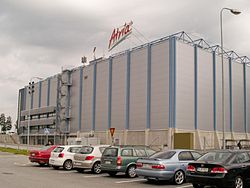 A slaughterhouse, Finland
 -
 Rungis International Market, France


Additives
[edit]When meat is industrially processed, additives are used to protect or modify its flavor or color, to improve its tenderness, juiciness or cohesiveness, or to aid with its preservation.[48]
| Additive | Examples | Function | Notes |
|---|---|---|---|
| Salt | n/a | Imparts flavor, inhibits microbial growth, extends the product's shelf life and helps emulsifying finely processed products, such as sausages. | The most common additive. Ready-to-eat meat products often contain 1.5 to 2.5 percent salt. |
| Nitrite | n/a | Curing meat, to stabilize color and flavor, and inhibit growth of spore-forming microorganisms such as Clostridium botulinum. | The use of nitrite's precursor nitrate is now limited to a few products such as dry sausage, prosciutto or parma ham. |
| Alkaline polyphosphates | Sodium tripolyphosphate | Increase the water-binding and emulsifying ability of meat proteins, limit lipid oxidation and flavor loss, and reduce microbial growth. | |
| Ascorbic acid (vitamin C) | n/a | Stabilize the color of cured meat. | |
| Sweeteners | Sugar, corn syrup | Impart a sweet flavor, bind water and assist surface browning during cooking in the Maillard reaction. | |
| Seasonings | Spices, herbs, essential oils | Impart or modify flavor. | |
| Flavorings | Monosodium glutamate | Strengthen existing flavors. | |
| Tenderizers | Proteolytic enzymes, acids | Break down collagen to make the meat more palatable for consumption. | |
| Antimicrobials | lactic, citric and acetic acid, calcium sulfate, cetylpyridinium chloride, lactoferrin, bacteriocins such as nisin. | Limit growth of meat spoilage bacteria | |
| Antioxidants | Limit lipid oxidation, which would create an undesirable "off flavor". | Used in precooked meat products. | |
| Acidifiers | Lactic acid, citric acid | Impart a tangy or tart flavor note, extend shelf-life, tenderize fresh meat or help with protein denaturation and moisture release in dried meat. | They substitute for the process of natural fermentation that acidifies some meat products such as hard salami or prosciutto. |
Consumption
[edit]This article is sourced from Wikipedia. Content is available under the Creative Commons Attribution-ShareAlike License.